
Hey there, foodie friend! Ready to tackle the most exciting challenge on your China food adventure?
If there’s one dish that represents Chinese culinary culture, it’s hot pot. Imagine this: a bubbling pot of broth at your table, fresh ingredients swirling in the soup, friends and family gathered around, eating and chatting late into the night… This is China’s favorite social meal.
But when you first face a hot pot menu full of Chinese characters and dozens of mysterious condiments, it can be intimidating. Don’t worry—we’re here to help you navigate. This guide will take you from hot pot novice to ordering expert.
Table of Contents
Chapter 1: Hot Pot History—One Pot, Thousands of Years
Hot pot isn’t some new trend. As early as the Shang and Zhou dynasties over 3,000 years ago, Chinese people were cooking food in bronze ding vessels. But the real “hot pot” form emerged during the Song Dynasty. What made it nationally popular was Emperor Qianlong of the Qing Dynasty—this foodie emperor tried hot pot during a southern tour, loved it, and upon returning to the palace, hosted a “Thousand Elders Banquet” with 1,550 hot pots.
Today, hot pot is a massive industry in China with annual consumption exceeding 800 billion RMB. Each Chinese person eats hot pot 4-5 times a year on average, and Sichuanese are even more extreme—once a week on average!
Chapter 2: 8 Major Chinese Hot Pot Styles—Which Should You Try?
1. Sichuan Mala Hot Pot
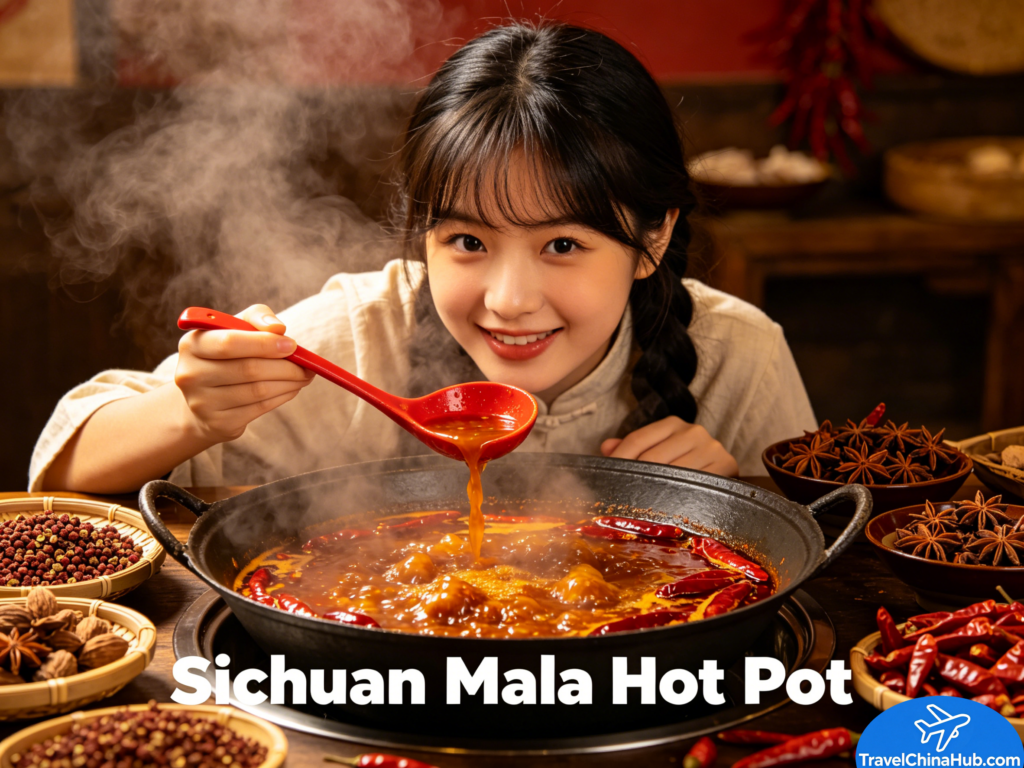
- Features: Beef tallow broth, covered with Sichuan peppercorns and dried chilies, numbing and spicy
- Must-try ingredients: Beef tripe, pork aorta, duck intestine, pork brain, spicy beef
- Best for: Spice lovers and adventurers
- Tip: Order “mild spicy”—Sichuan’s mild is other places’ medium
2. Chongqing Old Hot Pot
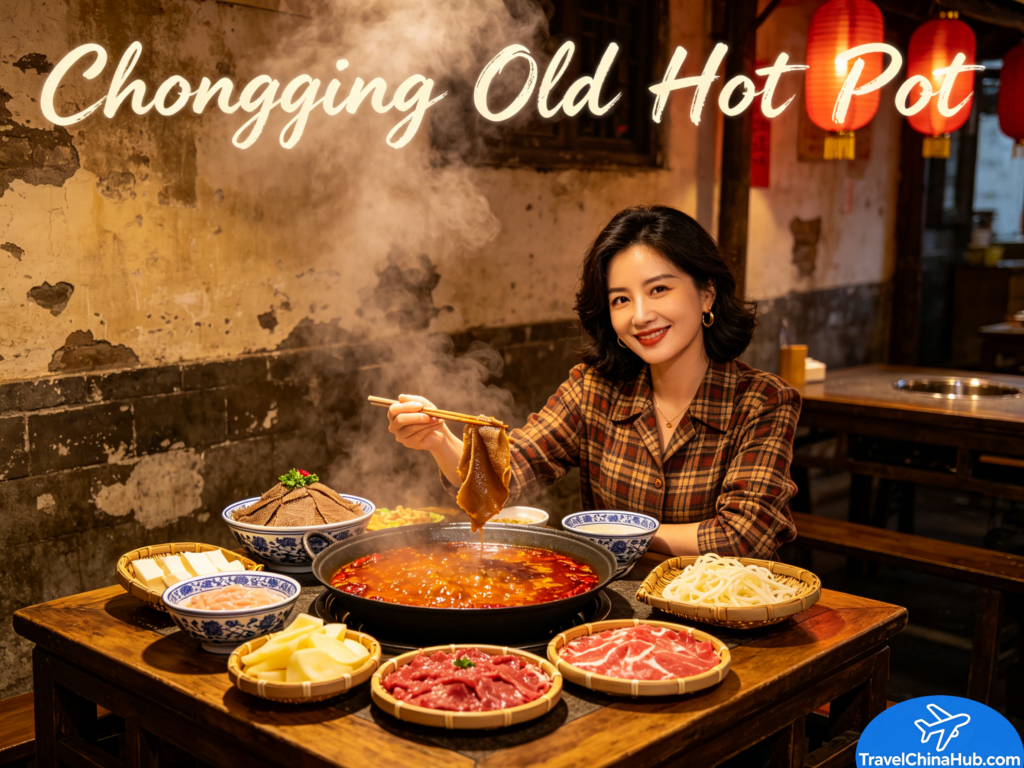
- Similar to Sichuan but more numbing, oilier, and stronger
- The nine-grid pot is iconic—each grid has different temperatures for different ingredients
- Local standard dip: sesame oil + garlic paste
3. Beijing Mongolian Hot Pot (Shuan Yang Rou)
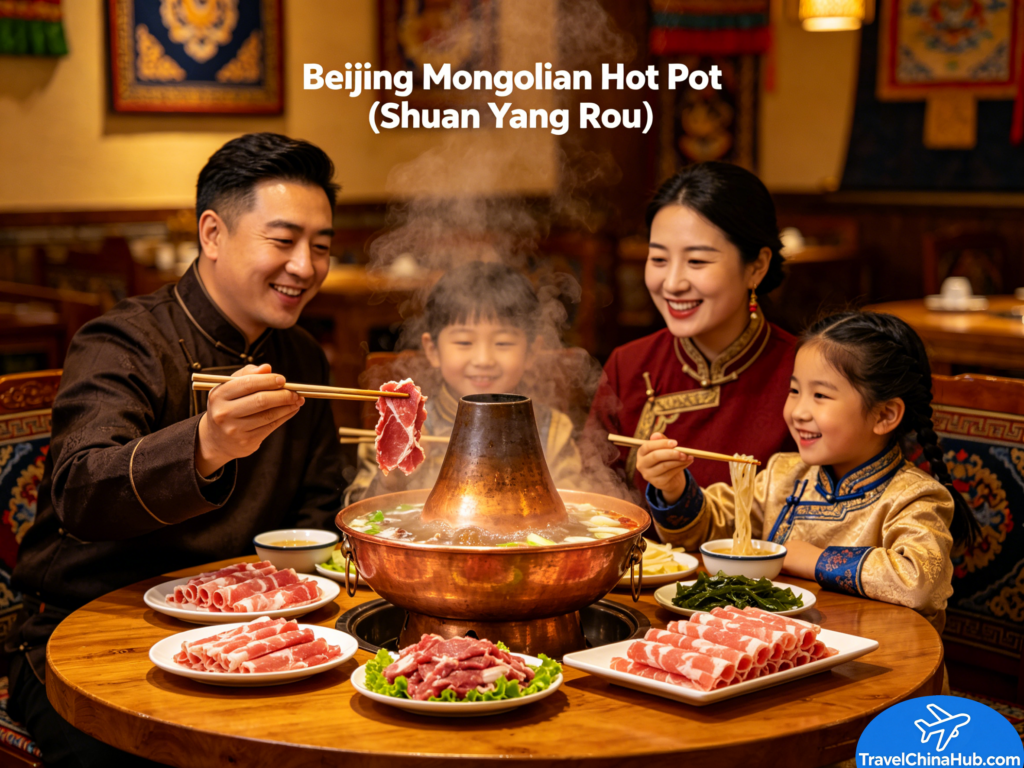
- Clear broth with just ginger, scallion, and goji berries
- Star ingredient: hand-sliced fresh mutton
- The dip is everything: sesame paste, fermented tofu sauce, leek flower sauce, chili oil
- Recommended restaurants: Donglaishun, Nanmen Shuanrou
4. Guangdong Dabinlou (Cantonese Hot Pot)
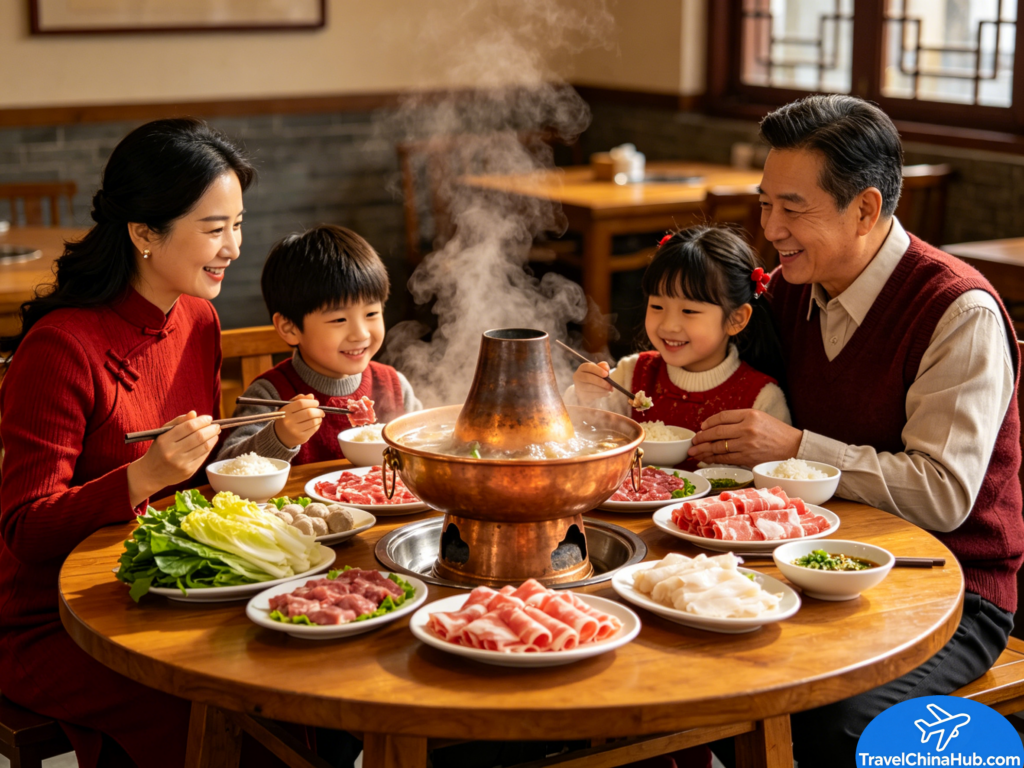
- Light and healthy, broth could be chicken, congee, or coconut chicken
- Seafood-focused: shrimp, crab, fish slices, shellfish
- Simple dip: light soy sauce + ginger shreds + scallions
- Perfect ending: add noodles or rice to the broth after cooking
5. Yunnan Wild Mushroom Hot Pot
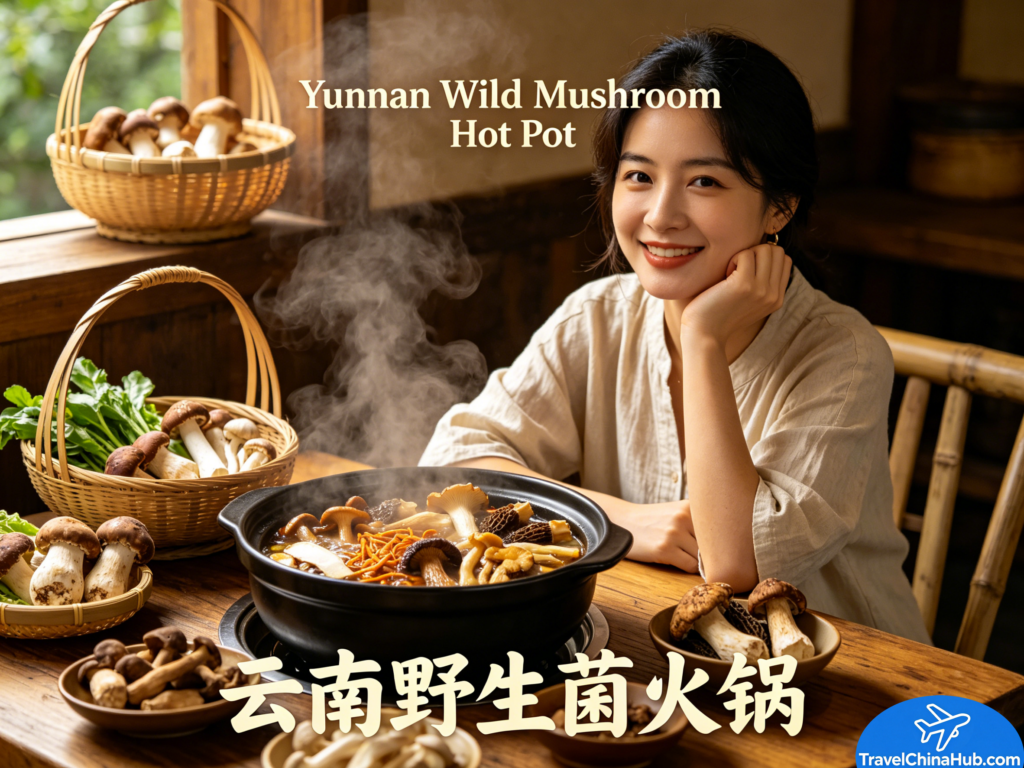
- Mushroom season is June-October
- Broth made with free-range chicken or ham, mixed with various wild mushrooms
- Important: Must cook thoroughly (usually 20+ minutes)—some mushrooms are toxic if undercooked
- Unbelievably umami experience
6. Chaoshan Beef Hot Pot
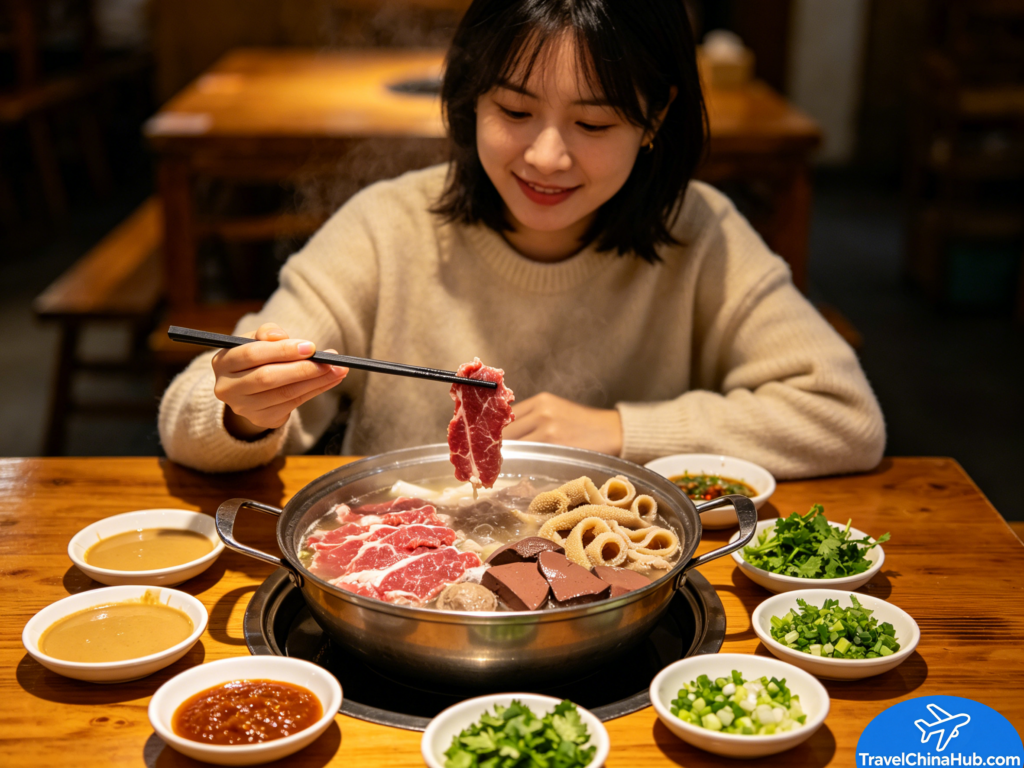
- Beef lovers’ paradise
- Every cut has a name: shibing, diao long, wu hua zhi, xiong kou you
- Precise cooking times: tender beef 8 seconds, beef shank 10 seconds…
- Satay sauce is the perfect match
7. Northeast Chinese Sauerkraut and Pork Hot Pot
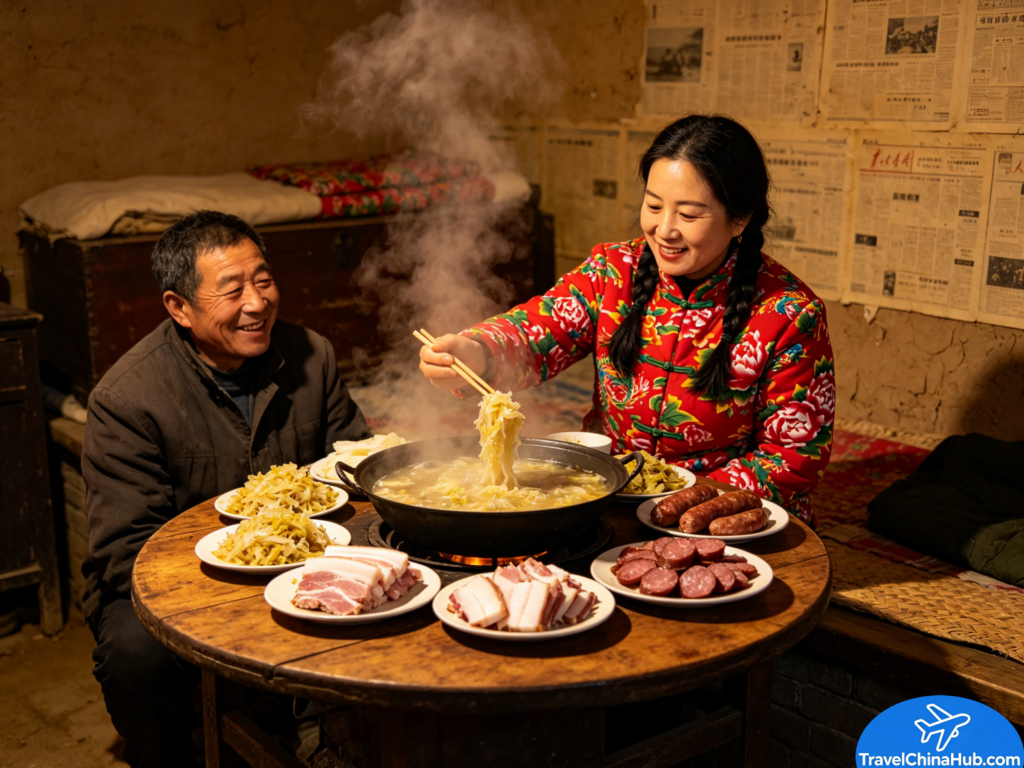
- Sauerkraut cuts the grease, pork belly is rich
- Perfect for cold winters
- Often includes blood sausage, frozen tofu, and glass noodles
8. Taiwanese Mala Hot Pot
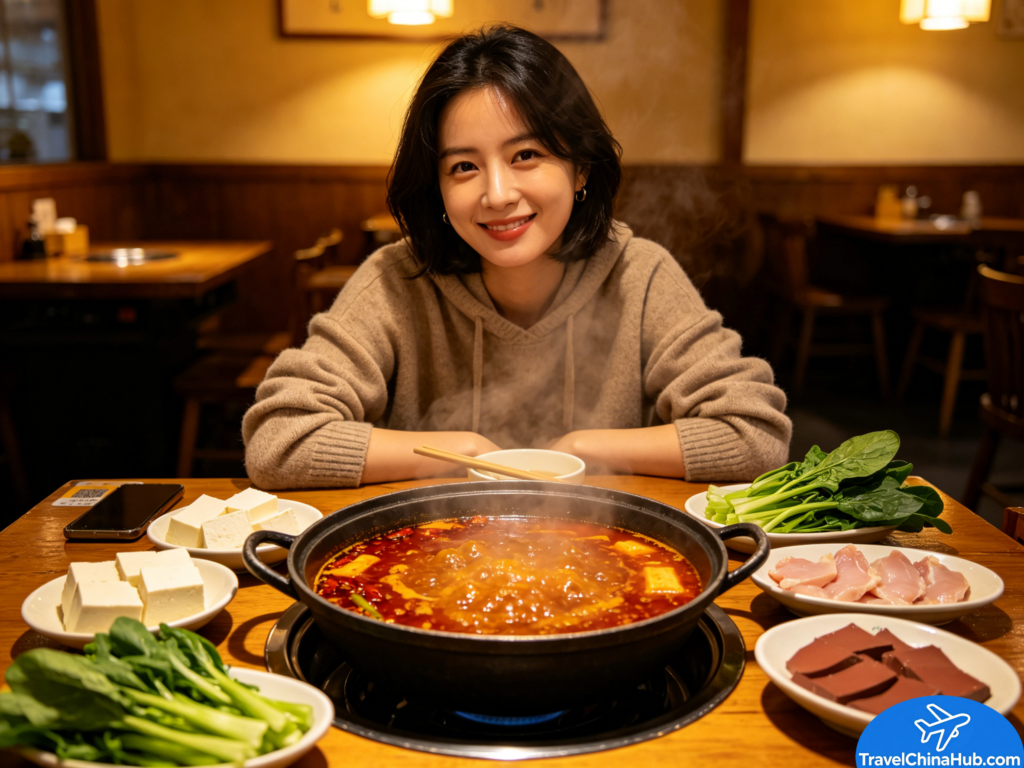
- Milder version of Sichuan hot pot
- Highlight: unlimited refills of duck blood and tofu
- Many places offer ice cream and drink buffets
Chapter 3: Ordering Guide—Order Like a Local
Step 1: Choose Your Broth
- Yuan Yang Guo (Mandarin Duck Pot): Half spicy, half clear—perfect for first-timers
- Tomato Broth: Sweet and tangy, most popular with foreigners
- Mushroom Broth: Umami and healthy
- Clear Broth: Best for tasting ingredients’ natural flavors
Step 2: Order Meat
- Mutton: 8-10 seconds, until color changes
- Beef: Different cuts have different times—ask your server
- Tripe: “Seven ups, eight downs”—about 15 seconds
- Pork Aorta: 1-2 minutes, until crispy
Step 3: Order Vegetables and Tofu
- Cabbage, spinach, lettuce: Absorb oil and cut grease
- Tofu, tofu skin, frozen tofu: Soak up all the broth’s goodness
- Mushrooms: enoki, shiitake, oyster mushrooms
Step 4: Order Carbs and Sides
- Hand-pulled noodles: Add last to absorb all the flavors
- Brown sugar glutinous rice cake: Classic dessert
- Crispy pork: Can eat directly or cook in the broth
Chapter 4: Dipping Sauce Secrets
Basic formula: Oil Dip vs Sesame Paste Dip
Oil Dip (Sichuan/Chongqing):
- Base: Sesame oil + garlic paste
- Upgrade: Add oyster sauce, cilantro, scallions, Thai chili
- Luxury: Plus crushed peanuts, sesame seeds, vinegar
Sesame Paste Dip (Beijing):
- Base: Sesame paste + leek flower sauce + fermented tofu sauce
- Ratio: 3:1:1
- Optional: Chili oil, cilantro, sesame seeds
Seafood Soy Sauce Dip (Cantonese):
- Steamed fish soy sauce + ginger shreds + scallions + Thai chili
- Simple and fresh, highlights ingredients’ natural taste
Chapter 5: Dining Etiquette and Taboos
Do:
- Use public chopsticks for raw food, personal chopsticks only for eating
- Cook long-cooking items first (radish, corn, mushrooms)
- Cook meat slice by slice, don’t dump the whole plate
- Help others at the table add broth or ingredients
- When saying “gan bei” (cheers), keep your glass lower than elders/superiors
Don’t:
- Stick chopsticks upright in rice (resembles funeral incense)
- Stir the pot randomly with chopsticks
- Be too loud (some upscale hot pot places are quiet)
- Bite food and put it back in the pot
- Waste food—order appropriately
Chapter 6: Special Tips for Foreign Visitors
Spice Level:
- If you don’t eat spicy: Order clear or tomato broth
- Can handle some spice: “Wei la” (mild spicy)
- Love spice: “Zhong la” (medium spicy)
- Sichuan/Chongqing local level: Think carefully about “Te la” (extra spicy)
Communication Phrases:
- “Yuan Yang Guo” = Half spicy, half clear pot
- “Wei la” = Mild spicy
- “Bu yao xiang cai” = No cilantro
- “Zhang dan” = Bill/check
Health Tips:
- Spicy broth can cause “heatiness”—you might feel uncomfortable next day
- Pair with herbal tea or yogurt to ease digestion
- Don’t drink the broth, especially after long cooking
- Control portions—it’s easy to overeat with hot pot
Chapter 7: City Recommendations & Budget
Beijing:
- Donglaishun (¥150-200/person): Time-honored brand, Mongolian hot pot
- Haidilao (¥120-180/person): Excellent service, individual pots available
- Jubao Yuan (¥100-150/person): Locals’ favorite
Chengdu:
- Xiaolongkan (¥100-150/person): Viral restaurant, often has queues
- Shu Daxia (¥90-140/person): Martial arts theme
- Local recommendation: Small shops in residential areas, ¥60-100/person
Chongqing:
- Peijie Old Hot Pot (¥110-160/person): Always busy
- Zhou Shixiong Big Knife Pork Kidney Hot Pot (¥100-150/person): Famous for kidney slices
- Alleyway old hot pot: ¥70-120/person, more authentic
Guangzhou:
- Baheli Haiji Beef Restaurant (¥90-130/person): Chaoshan beef hot pot
- Dayong Yi (¥100-150/person): Sichuan hot pot, moderate spice
- Bingsheng Pinyi (¥150-250/person): High-end Cantonese hot pot
Budget Guide:
- Budget: ¥60-100/person
- Mid-range: ¥100-150/person
- Upscale: ¥150-300/person
- Luxury: ¥300+/person
Chapter 8: FAQ
Q: Can I eat hot pot alone?
A: Absolutely! Many hot pot places now offer individual pots. Haidilao even provides a stuffed animal to keep you company.
Q: Do I need reservations?
A: For popular places, definitely—especially on weekends. You can book through the Dazhongdianping (like Yelp) app.
Q: Is the condiment bar free?
A: Usually charged per person, ¥8-15, with unlimited refills.
Q: Can I bring my own drinks?
A: Most places don’t allow it, but some smaller shops might.
Q: How long does a hot pot meal take?
A: At least 1.5-2 hours. Taking it slow, eating and chatting, is the essence.
Q: Will my clothes smell afterward?
A: Yes. Many places provide deodorizing spray or aprons.
Chapter 9: Conclusion—Start Your Hot Pot Adventure
Remember, eating hot pot in China isn’t just about the food—it’s about the atmosphere, the culture, the connection. Don’t be afraid to make mistakes, don’t be afraid of tears from the spice, don’t be afraid to try weird offal—these are all stories.
The best hot pot place might not be in any guide, but in the small alley near where you’re staying. Check reviews on Dazhongdianping, find a place full of locals, walk in, order a Yuan Yang pot, and enjoy this sizzling adventure.
Enjoy your meal! If this guide helped you, or if you have an amazing hot pot experience to share, don’t forget to tell us on our Contact Us page.
Your Food Guide,
The Travel China Hub Team